
Empowering Students with AI-Powered Assessments & Intelligent Learning

JEE Main 2023 (10 Apr, Shift 2)

60 questions from this JEE Main 2023 paper. Log in to view the correct answer and explanation for each question.

Q1 MATHS Unit 4: Permutations and Combinations
Let $A = \{2, 3, 4\}$ and $B = \{8, 9, 12\}$. Then the number of elements in the relation $R = \{((a_1, b_1), (a_2, b_2)) \in (A \times B, A \times B) : a_1$ divides $b_2$ and $a_2$ divides $b_1\}$ is
  • A. 12
  • B. 18
  • C. 24
  • D. 36

Correct answer & explanation hidden

Log in to view solution →
Q2 MATHS Unit 2: Complex Numbers and Quadratic Equations
Let $S = \{x \in \left(-\frac{\pi}{2}, \frac{\pi}{2}\right) : 9^{1-\tan^2 x} + 9^{\tan^2 x} = 10\}$ and $\beta = \sum_{x\in S} \tan^2\left(\frac{x}{3}\right)$, then $\frac{1}{6}(\beta - 14)^2$ is equal to
  • A. 8
  • B. 16
  • C. 32
  • D. 64

Correct answer & explanation hidden

Log in to view solution →
Q3 MATHS Unit 2: Complex Numbers and Quadratic Equations
Let $S = \left\{ z = x + iy : \frac{2z-3i}{4z+2i}$ is a real number \right\}. Then which of the following is NOT correct?
  • A. $x = 0$
  • B. $y \in (-\infty,-\frac{1}{2}) \cup (-\frac{1}{2},\infty)$
  • C. $y + x^2 + y^2 \ne \frac{1}{4}$
  • D. $(x,y) = (0,-\frac{1}{2})$

Correct answer & explanation hidden

Log in to view solution →
Q4 MATHS Unit 3: Matrices and Determinants
If $A = \frac{1}{5!\,6!\,7!}\begin{bmatrix}5! & 6! & 7!\\6! & 7! & 8!\\7! & 8! & 9!\end{bmatrix}$, then $|\operatorname{adj}(\operatorname{adj}(2A))|$ is equal to
  • A. $2^{20}$
  • B. $2^{16}$
  • C. $2^{12}$
  • D. $2^8$

Correct answer & explanation hidden

Log in to view solution →
Q5 MATHS Unit 4: Permutations and Combinations
Eight persons are to be transported from city A to city B in three cars of different makes. If each car can accommodate at most three persons, then the number of ways, in which they can be transported, is
  • A. 560
  • B. 1120
  • C. 1680
  • D. 3360

Correct answer & explanation hidden

Log in to view solution →
Q6 MATHS Unit 5: Binomial Theorem and its Simple Applications
If the coefficients of $x$ and $x^2$ in $(1+x)^p(1-x)^q$ are 4 and $-5$ respectively, then $2p+3q$ is equal to
  • A. 60
  • B. 63
  • C. 66
  • D. 69

Correct answer & explanation hidden

Log in to view solution →
Q7 MATHS Unit 6: Sequence and Series
Let the number $(22)^{2022} + (2022)^{22}$ leave the remainder $\alpha$ when divided by $3$ and $\beta$ when divided by $7$. Then $(\alpha^2 + \beta^2)$ is equal to
  • A. 5
  • B. 10
  • C. 13
  • D. 20

Correct answer & explanation hidden

Log in to view solution →
Q8 MATHS Unit 6: Sequence and Series
If $S_n = 4 + 11 + 21 + 34 + 50 + \cdots$ to $n$ terms, then $\frac{1}{60}(S_{29}-S_9)$ is equal to
  • A. 220
  • B. 223
  • C. 226
  • D. 227

Correct answer & explanation hidden

Log in to view solution →
Q9 MATHS Unit 8: Integral Calculus
Let $g(x)=f(x)+f(1-x)$ and $f''(x)>0$, $x\in(0,1)$. If $f$ is decreasing in the interval $(0,\alpha)$ and increasing in the interval $(\alpha,1)$, then $\tan^{-1}(2\alpha)+\tan^{-1}\left(\frac{1}{\alpha}\right)+\tan^{-1}\left(\frac{\alpha+1}{\alpha}\right)$ is equal to
  • A. $\frac{5\pi}{4}$
  • B. $\frac{3\pi}{2}$
  • C. $\frac{3\pi}{4}$
  • D. $\pi$

Correct answer & explanation hidden

Log in to view solution →
Q10 MATHS Unit 8: Integral Calculus
For $\alpha, \beta, \gamma, \delta \in \mathbb{N}$, if $$\int \left(\left(\frac{x}{e}\right)^{2x}+\left(\frac{e}{x}\right)^{2x}\right)\log_e x\,dx=\frac{1}{\alpha}\left(\frac{x}{e}\right)^{\beta x}-\frac{1}{\gamma}\left(\frac{e}{x}\right)^{\delta x}+C,$$ where $e=\sum_{n=0}^{\infty}\frac{1}{n!}$ and $C$ is constant of integration, then $\alpha+2\beta+3\gamma-4\delta$ is equal to
  • A. -8
  • B. -4
  • C. 1
  • D. 4

Correct answer & explanation hidden

Log in to view solution →
Q11 MATHS Unit 8: Integral Calculus
Let $f$ be a continuous function satisfying $$\int_0^{t^2}\big(f(x)+x^2\big)\,dx=\frac{4}{3}t^3,\ \forall t>0.$$ Then $f\left(\frac{\pi^2}{4}\right)$ is equal to
  • A. $-\pi^2\left(1+\frac{\pi^2}{16}\right)$
  • B. $\pi^2\left(1-\frac{\pi^2}{16}\right)$
  • C. $-\pi\left(1+\frac{\pi^3}{16}\right)$
  • D. $\pi\left(1-\frac{\pi^3}{16}\right)$

Correct answer & explanation hidden

Log in to view solution →
Q12 MATHS Unit 10: Co-ordinate Geometry
Let $A$ be the point $(1,2)$ and $B$ be any point on the curve $x^2+y^2=16$. If the centre of the locus of the point $P$, which divides the line segment $AB$ in the ratio $3:2$ is the point $C(\alpha,\beta)$, then the length of the line segment $AC$ is
  • A. $\frac{3\sqrt{5}}{5}$
  • B. $\frac{2\sqrt{5}}{5}$
  • C. $\frac{4\sqrt{5}}{5}$
  • D. $\frac{6\sqrt{5}}{5}$

Correct answer & explanation hidden

Log in to view solution →
Q13 MATHS Unit 10: Co-ordinate Geometry
Let a circle of radius 4 be concentric to the ellipse $15x^2+19y^2=285$. Then the common tangents are inclined to the minor axis of the ellipse at the angle
  • A. $\frac{\pi}{3}$
  • B. $\frac{\pi}{4}$
  • C. $\frac{\pi}{6}$
  • D. $\frac{\pi}{12}$

Correct answer & explanation hidden

Log in to view solution →
Q14 MATHS Unit 10: Co-ordinate Geometry
Let the image of the point $P(1,2,6)$ in the plane passing through the points $A(1,2,0)$, $B(1,4,1)$ and $C(0,5,1)$ be $Q(\alpha,\beta,\gamma)$. Then $(\alpha^2+\beta^2+\gamma^2)$ is equal to
  • A. 62
  • B. 65
  • C. 70
  • D. 76

Correct answer & explanation hidden

Log in to view solution →
Q15 MATHS Unit 11: Three Dimensional Geometry
Let the line $\frac{x}{1}=\frac{6-y}{2}=\frac{z+8}{5}$ intersect the lines $\frac{x-5}{4}=\frac{y-7}{3}=\frac{z+2}{1}$ and $\frac{x+3}{6}=\frac{3-y}{6}=\frac{z-6}{1}$ at the points $A$ and $B$ respectively. Then the distance of the mid-point of the line segment $AB$ from the plane $2x-2y+z=14$ is
  • A. $\frac{10}{3}$
  • B. $\frac{11}{3}$
  • C. $4$
  • D. $3$

Correct answer & explanation hidden

Log in to view solution →
Q16 MATHS Unit 12: Vector Algebra
$\vec a=2\hat i+7\hat j-\hat k$, $\vec b=3\hat i+5\hat k$ and $\vec c=\hat i-\hat j+2\hat k$. Let $\vec d$ be a vector which is perpendicular to both $\vec a$ and $\vec b$, and $\vec c\cdot\vec d=12$. Then $(-\hat i+\hat j-\hat k)\cdot(\vec c\times\vec d)$ is equal to
  • A. 24
  • B. 42
  • C. 44
  • D. 48

Correct answer & explanation hidden

Log in to view solution →
Q17 MATHS Unit 12: Vector Algebra
If the points P and Q are respectively the circumcenter and the orthocenter of a $\triangle ABC$, then $\overline{PA} + \overline{PB} + \overline{PC}$ is equal to
  • A. $2\overline{QP}$
  • B. $\overline{QP}$
  • C. $\overline{PQ}$
  • D. $2\overline{PQ}$

Correct answer & explanation hidden

Log in to view solution →
Q18 MATHS Unit 4: Permutations and Combinations
Let a die be rolled $n$ times. Let the probability of getting odd numbers seven times be equal to the probability of getting odd numbers nine times. If the probability of getting even numbers twice is $\dfrac{k}{2^{15}}$, then $k$ is equal to.
  • A. 15
  • B. 30
  • C. 60
  • D. 90

Correct answer & explanation hidden

Log in to view solution →
Q19 MATHS Unit 6: Sequence and Series
Let $\mu$ be the mean and $\sigma$ be the standard deviation of the distribution $\begin{array}{c|cccccc} x_i & 0 & 1 & 2 & 3 & 4 & 5 \\ \hline f_i & k+2 & 2k & k^2-1 & k^2-1 & k^2+1 & k-3 \end{array}$ where $\sum f_i=62$. If $[x]$ denotes the greatest integer $\le x$, then $[\mu^2+\sigma^2]$ is equal to
  • A. 6
  • B. 7
  • C. 8
  • D. 9

Correct answer & explanation hidden

Log in to view solution →
Q20 CHEMISTRY Unit 14: Some Basic Principles of Organic Chemistry
The statement $\neg[p \vee (\neg p \wedge q)]$ is equivalent to
  • A. $(\neg(p \wedge q)) \wedge q$
  • B. $\neg(p \vee q)$
  • C. $(p \wedge q) \wedge (\neg p)$
  • D. $\neg(p \wedge q)$

Correct answer & explanation hidden

Log in to view solution →
Q31 PHYSICS Unit 8: Thermodynamics
The distance between two plates of a capacitor is $d$ and its capacitance is $C_1$, when air is the medium between the plates. If a metal sheet of thickness $\dfrac{2d}{3}$ and of the same area as plate is introduced between the plates, the capacitance of the capacitor becomes $C_2$. The ratio $\dfrac{C_2}{C_1}$ is
  • A. $1:1$
  • B. $2:1$
  • C. $3:1$
  • D. $4:1$

Correct answer & explanation hidden

Log in to view solution →
Q32 PHYSICS Unit 10: Oscillations and Waves
For a periodic motion represented by the equation $$y=\sin \omega t + \cos \omega t$$ the amplitude of the motion is
  • A. 0.5
  • B. 1
  • C. $\sqrt{2}$
  • D. 2

Correct answer & explanation hidden

Log in to view solution →
Q33 PHYSICS Unit 8: Thermodynamics
A gas mixture consists of $2$ moles of oxygen and $4$ moles of neon at temperature $T$. Neglecting all vibrational modes, the total internal energy of the system will be,
  • A. $4RT$
  • B. $8RT$
  • C. $11RT$
  • D. $16RT$

Correct answer & explanation hidden

Log in to view solution →
Q34 PHYSICS Unit 8: Thermodynamics
A gas is compressed adiabatically, which one of the following statement is NOT true.
  • A. The temperature of the gas increases.
  • B. The change in the internal energy is equal to the work done on the gas.
  • C. There is no change in the internal energy
  • D. There is no heat supplied to the system

Correct answer & explanation hidden

Log in to view solution →
Q35 PHYSICS Unit 4: Work Energy and Power
Young's moduli of the material of wires A and B are in the ratio $1:4$, while its area of cross sections are in the ratio $1:3$. If the same amount of load is applied to both the wires, the amount of elongation produced in the wires A and B will be in the ratio of [Assume length of wires A and B same]
  • A. 1:12
  • B. 1:36
  • C. 12:1
  • D. 36:1

Correct answer & explanation hidden

Log in to view solution →
Q36 PHYSICS Unit 6: Gravitation
Given below are two statements: Statement I : Rotation of the earth shows effect on the value of acceleration due to gravity $(g)$ Statement II : The effect of rotation of the earth on the value of '$g$' at the equator is minimum and that at the pole is maximum. In the light of the above statements, choose the correct answer from the options given below
  • A. Both Statement I and Statement II are true
  • B. Both Statement I and Statement II are false
  • C. Statement I is true but statement II is false
  • D. Statement I is false but statement II is true

Correct answer & explanation hidden

Log in to view solution →
Q37 PHYSICS Unit 6: Gravitation
The time period of a satellite, revolving above earth's surface at a height equal to $R$ will be (Given $g=\pi^2\,\text{m/s}^2$, $R$ = radius of earth)
  • A. $\sqrt{2R}$
  • B. $\sqrt{4R}$
  • C. $\sqrt{8R}$
  • D. $\sqrt{32R}$

Correct answer & explanation hidden

Log in to view solution →
Q38 PHYSICS Unit 2: Kinematics
Two projectiles are projected at $30^\circ$ and $60^\circ$ with the horizontal with the same speed. The ratio of the maximum height attained by the two projectiles respectively is:
  • A. 1:3
  • B. 1:$\sqrt{3}$
  • C. 2:$\sqrt{3}$
  • D. $\sqrt{3}$:1

Correct answer & explanation hidden

Log in to view solution →
Q39 PHYSICS Unit 20: Experimental Skills
In an experiment with vernier calipers of least count $0.1$ mm, when two jaws are joined together the zero of vernier scale lies right to the zero of the main scale and 6th division of vernier scale coincides with the main scale division. While measuring the diameter of a spherical bob, the zero of vernier scale lies in between $3.2$ cm and $3.3$ cm marks, and 4th division of vernier scale coincides with the main scale division. The diameter of bob is measured as
  • A. 3.26 cm
  • B. 3.25 cm
  • C. 3.22 cm
  • D. 3.18 cm

Correct answer & explanation hidden

Log in to view solution →
Q40 PHYSICS Unit 4: Work Energy and Power
A person travels $x$ distance with velocity $v_1$ and then $x$ distance with velocity $v_2$ in the same direction. The average velocity of the person is $v$, then the relation between $v$, $v_1$ and $v_2$ will be.
  • A. $v=\dfrac{v_1+v_2}{2}$
  • B. $v=v_1+v_2$
  • C. $\dfrac{1}{v}=\dfrac{1}{v_1}+\dfrac{1}{v_2}$
  • D. $\dfrac{2}{v}=\dfrac{1}{v_1}+\dfrac{1}{v_2}$

Correct answer & explanation hidden

Log in to view solution →
Q41 PHYSICS Unit 3: Laws of Motion
Given below are two statements: one is labelled as Assertion A and the other is labelled as Reason R Assertion A : An electric fan continues to rotate for some time after the current is switched off. Reason R : Fan continues to rotate due to inertia of motion. In the light of above statements, choose the most appropriate answer from the options given below.
  • A. Both A and R are correct and R is the correct explanation of A
  • B. Both A and R are correct but R is NOT the correct explanation of A
  • C. A is correct but R is not correct
  • D. A is not correct but R is correct

Correct answer & explanation hidden

Log in to view solution →
Q42 PHYSICS Unit 15: Electromagnetic Waves
A message signal of frequency $3\,\text{kHz}$ is used to modulate a carrier signal of frequency $1.5\,\text{MHz}$. The bandwidth of the amplitude modulated wave is
  • A. 6 MHz
  • B. 3 MHz
  • C. 3 kHz
  • D. 6 kHz

Correct answer & explanation hidden

Log in to view solution →
Q43 PHYSICS Unit 12: Current Electricity
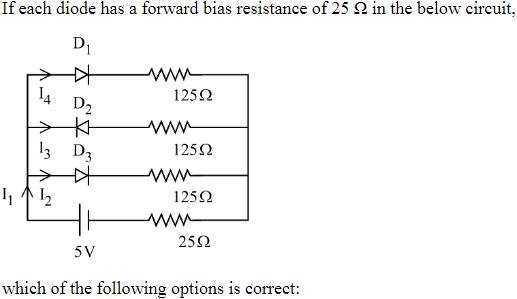
If each diode has a forward bias resistance of $25\,\Omega$ in the below circuit, which of the following options is correct:
Question 43 image
  • A. $\frac{I_1}{I_2}=1$
  • B. $\frac{I_2}{I_3}=1$
  • C. $\frac{I_3}{I_4}=1$
  • D. $\frac{I_1}{I_2}=2$

Correct answer & explanation hidden

Log in to view solution →
Q44 CHEMISTRY Unit 8: Chemical Kinetics
The half life of a radioactive substance is $T$. The time taken, for disintegrating $\frac{7}{8}$th part of its original mass will be:
  • A. $T$
  • B. $2T$
  • C. $3T$
  • D. $8T$

Correct answer & explanation hidden

Log in to view solution →
Q45 PHYSICS Unit 17: Dual Nature of Matter and Radiation
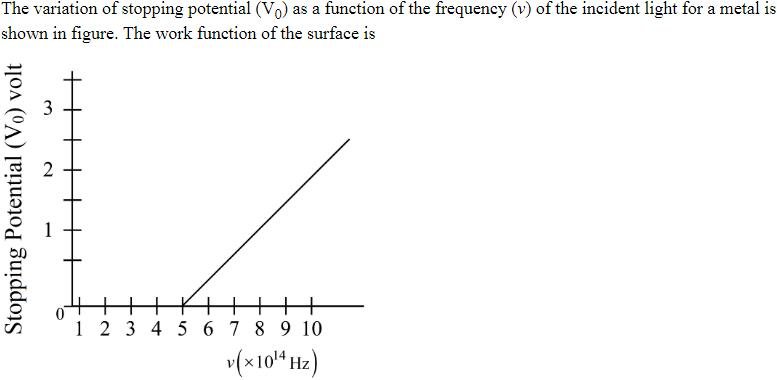
The variation of stopping potential $(V_0)$ as a function of the frequency $(\nu)$ of the incident light for a metal is shown in figure. The work function of the surface is
Question 45 image
  • A. $1.36\,\text{eV}$
  • B. $2.98\,\text{eV}$
  • C. $2.07\,\text{eV}$
  • D. $18.6\,\text{eV}$

Correct answer & explanation hidden

Log in to view solution →
Q46 PHYSICS Unit 13: Magnetic Effects of Current and Magnetism
A bar magnet is released from rest along the axis of a very long vertical copper tube. After some time the magnet will
  • A. move down with an acceleration equal to $g$
  • B. move down with an acceleration greater than $g$
  • C. move down with almost constant speed
  • D. oscillate inside the tube

Correct answer & explanation hidden

Log in to view solution →
Q47 PHYSICS Unit 16: Optics
The ratio of intensities at two points $P$ and $Q$ on the screen in a Young's double slit experiment where phase difference between two waves of same amplitude are $\pi/3$ and $\pi/2$, respectively are
  • A. $3:2$
  • B. $2:3$
  • C. $1:3$
  • D. $3:1$

Correct answer & explanation hidden

Log in to view solution →
Q48 PHYSICS Unit 15: Electromagnetic Waves
The amplitude of magnetic field in an electromagnetic wave propagating along $y$-axis is $6.0\times 10^{-7}\,\text{T}$. The maximum value of electric field in the electromagnetic wave is
  • A. $6.0\times 10^{-7}\,\text{V m}^{-1}$
  • B. $180\,\text{V m}^{-1}$
  • C. $2\times 10^{15}\,\text{V m}^{-1}$
  • D. $5\times 10^{14}\,\text{V m}^{-1}$

Correct answer & explanation hidden

Log in to view solution →
Q49 PHYSICS Unit 11: Electrostatics
Given below are two statements: Statement I : For diamagnetic substance, $-1 \leq \chi < 0$, where $\chi$ is the magnetic susceptibility. Statement II : Diamagnetic substances when placed in an external magnetic field, tend to move from stronger to weaker part of the field. In the light of the above statements, choose the correct answer from the options given below
  • A. Both Statement I and Statement II are true
  • B. Both Statement I and Statement II are False
  • C. Statement I is correct but Statement II is false
  • D. Statement I is incorrect but Statement II is true

Correct answer & explanation hidden

Log in to view solution →
Q50 PHYSICS Unit 12: Current Electricity
In a metallic conductor, under the effect of applied electric field, the free electrons of the conductor
  • A. drift from higher potential to lower potential.
  • B. move in the straight line paths in the same direction
  • C. move with the uniform velocity throughout from lower potential to higher potential
  • D. move in the curved paths from lower potential to higher potential

Correct answer & explanation hidden

Log in to view solution →
Q61 CHEMISTRY Unit 1: Some Basic Concepts in Chemistry
Match List I with List II LIST I A. 16 g of CH$_4$ (g) B. 1 g of H$_2$ (g) C. 1 mole of N$_2$ (g) D. 0.5 mol of SO$_2$ (g) LIST II I. Weighs 28 g II. $60.2 \times 10^{23}$ electrons III. Weighs 32 g IV. Occupies 11.4 L volume at STP Choose the correct answer from the options given below:
  • A. A-I, B-III, C-II, D-IV
  • B. A-II, B-IV, C-I, D-III
  • C. A-II, B-IV, C-III, D-I
  • D. A-II, B-III, C-IV, D-I

Correct answer & explanation hidden

Log in to view solution →
Q62 CHEMISTRY Unit 3: Chemical Bonding and Molecular Structure
The correct relationships between unit cell edge length $a$ and radius of sphere $r$ for face-centred and body-centred cubic structures respectively are:
  • A. $2\sqrt{2}\,r = a$ and $4r = \sqrt{3}\,a$
  • B. $r = 2\sqrt{2}\,a$ and $4r = \sqrt{3}\,a$
  • C. $r = 2\sqrt{2}\,a$ and $\sqrt{3}\,r = 4a$
  • D. $2\sqrt{2}\,r = a$ and $\sqrt{3}\,r = 4a$

Correct answer & explanation hidden

Log in to view solution →
Q63 CHEMISTRY Unit 13: Purification and Characterisation of Organic Compounds
Ferric chloride is applied to stop bleeding because -
  • A. $\mathrm{FeCl_3}$ reacts with the constituents of blood which is a positively charged sol.
  • B. $\mathrm{Cl^-}$ ions cause coagulation of blood.
  • C. $\mathrm{Fe^{3+}}$ ions coagulate blood which is a negatively charged sol.
  • D. Blood absorbs $\mathrm{FeCl_3}$ and forms a complex.

Correct answer & explanation hidden

Log in to view solution →
Q64 CHEMISTRY Unit 9: Classification of Elements and Periodicity in Properties
The correct order of metallic character is =
  • A. K > Ca > Be
  • B. Be > Ca > K
  • C. K > Be > Ca
  • D. Ca > K > Be

Correct answer & explanation hidden

Log in to view solution →
Q65 CHEMISTRY Unit 4: Chemical Thermodynamics
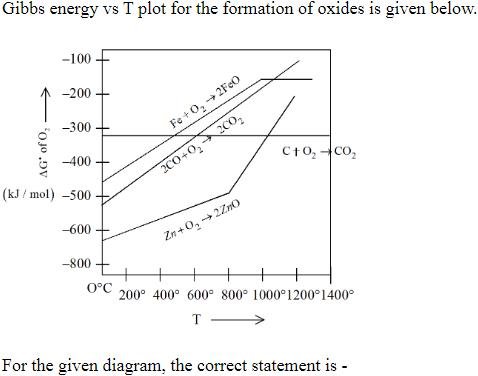
Gibbs energy vs $T$ plot for the formation of oxides is given below. For the given diagram, the correct statement is -
Question 65 image
  • A. At $600^\circ\mathrm{C}$, C can reduce FeO
  • B. At $600^\circ\mathrm{C}$, C can reduce ZnO
  • C. At $600^\circ\mathrm{C}$, CO can reduce ZnO
  • D. CO cannot reduce FeO

Correct answer & explanation hidden

Log in to view solution →
Q66 CHEMISTRY Unit 2: Atomic Structure
Given below are two statements: one is labelled as Assertion A and the other is labelled as Reason R Assertion A : Physical properties of isotopes of hydrogen are different. Reason R : Mass difference between isotopes of hydrogen is very large. In the light of the above statements, choose the correct answer from the options given below:
  • A. Both A and R are true and R is the correct explanation of A
  • B. Both A and R are true but R is NOT the correct explanation of A
  • C. A is true but R is false
  • D. A is false but R is true

Correct answer & explanation hidden

Log in to view solution →
Q67 CHEMISTRY Unit 2: Atomic Structure
Number of water molecules in washing soda and soda ash respectively are:
  • A. 10 and 1
  • B. 1 and 10
  • C. 10 and 0
  • D. 1 and 0

Correct answer & explanation hidden

Log in to view solution →
Q68 CHEMISTRY Unit 2: Atomic Structure
Given below are two statements: one is labelled as Assertion A and the other is labelled as Reason R Assertion A : The energy required to form $\mathrm{Mg^{2+}}$ from Mg is much higher than that required to produce $\mathrm{Mg^+}$ Reason R : $\mathrm{Mg^{2+}}$ is small ion and carry more charge than $\mathrm{Mg^+}$ In the light of the above statements, choose the correct answer from the options given below:
  • A. Both A and R are true and R is the correct explanation of A
  • B. Both A and R are true but R is NOT the correct explanation of A
  • C. A is true but R is false
  • D. A is false but R is true

Correct answer & explanation hidden

Log in to view solution →
Q69 CHEMISTRY Unit 12: Coordination Compounds
The correct order of the number of unpaired electrons in the given complexes is: A. $[\mathrm{Fe(CN)_6}]^{3-}$ B. $[\mathrm{FeF_6}]^{3-}$ C. $[\mathrm{CoF_6}]^{3-}$ D. $[\mathrm{Cr(oxalate)_3}]^{3-}$ E. $[\mathrm{Ni(CO)_4}]$ Choose the correct answer from the options given below:
  • A. $E < A < B < D < C$
  • B. $A < E < D < C < B$
  • C. $E < A < D < C < B$
  • D. $E < A < C < B < D$

Correct answer & explanation hidden

Log in to view solution →
Q70 CHEMISTRY Unit 12: Coordination Compounds
Match List I with List II LIST I: Complex A. $[\mathrm{Ti(H_2O)_6}]^{2+}$ B. $[\mathrm{V(H_2O)_6}]^{2+}$ C. $[\mathrm{Mn(H_2O)_6}]^{3+}$ D. $[\mathrm{Fe(H_2O)_6}]^{3+}$ LIST II: Crystal Field splitting energy ($\Delta_o$) I. $-1.2$ II. $-0.6$ III. $0$ IV. $-0.8$ Choose the correct answer from the options given below:
  • A. A-IV, B-I, C-II, D-III
  • B. A-II, B-IV, C-I, D-III
  • C. A-IV, B-I, C-III, D-II
  • D. A-II, B-IV, C-III, D-I

Correct answer & explanation hidden

Log in to view solution →
Q71 CHEMISTRY Unit 9: Classification of Elements and Periodicity in Properties
The delicate balance of $\mathrm{CO_2}$ and $\mathrm{O_2}$ is NOT disturbed by
  • A. Burning of coal
  • B. Burning of petroleum
  • C. Deforestation
  • D. Respiration

Correct answer & explanation hidden

Log in to view solution →
Q72 CHEMISTRY Unit 18: Organic Compounds Containing Nitrogen
In Carius tube, an organic compound $X$ is treated with sodium peroxide to form a mineral acid $Y$. The solution of $\mathrm{BaCl_2}$ is added to $Y$ to form a precipitate $Z$. $Z$ is used for the quantitative estimation of an extra element. $X$ could be
  • A. A nucleotide
  • B. Methionine
  • C. Cytosine
  • D. Chloroxylenol

Correct answer & explanation hidden

Log in to view solution →
Q73 CHEMISTRY Unit 14: Some Basic Principles of Organic Chemistry
The decreasing order of hydride affinity for following carbocations is:
  • A. A, C, B, D Choice A image
  • B. A, C, D, B Choice B image
  • C. A, C, D, B Choice C image
  • D. C, A, D, B Choice D image

Correct answer & explanation hidden

Log in to view solution →
Q74 CHEMISTRY Unit 16: Organic Compounds Containing Halogens
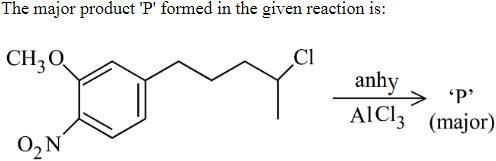
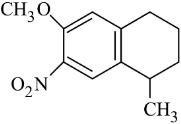
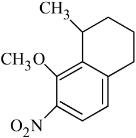
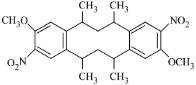
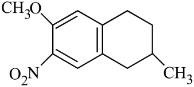
The major product $P$ formed in the given reaction is:
Question 74 image
  • A. Fused bicyclic aromatic product with methyl on the saturated ring Choice A image
  • B. Fused bicyclic product with methyl on the aromatic-fused carbon Choice B image
  • C. Highly substituted dimeric aromatic product Choice C image
  • D. Fused bicyclic product with methyl on the side of the cyclohexane ring Choice D image
Correct answer & explanation hidden

Log in to view solution →
Q75 CHEMISTRY Unit 17: Organic Compounds Containing Oxygen
Incorrect method of preparation for alcohols from the following is:
  • A. Hydroboration-oxidation of alkene.
  • B. Reaction of ketone with $\mathrm{RMgBr}$ followed by hydrolysis.
  • C. Ozonolysis of alkene.
  • D. Reaction of alkyl halide with aqueous $\mathrm{NaOH}$.

Correct answer & explanation hidden

Log in to view solution →
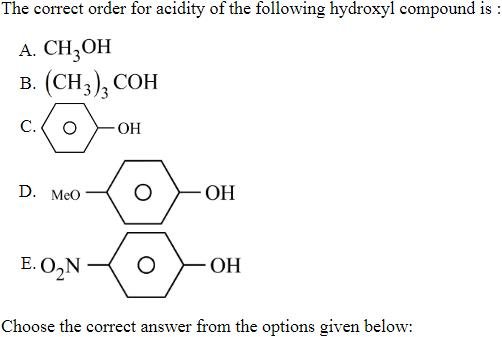
Q76 CHEMISTRY Unit 17: Organic Compounds Containing Oxygen
The correct order for acidity of the following hydroxyl compound is: A. $\mathrm{CH_3OH}$ B. $(\mathrm{CH_3})_3\mathrm{COH}$ C. Phenol D. $\mathrm{MeO}$-substituted phenol E. $\mathrm{O_2N}$-substituted phenol Choose the correct answer from the options given below:
Question 76 image
  • A. E > C > D > A > B Choice A image
  • B. E > D > C > B > A Choice B image
  • C. D > E > C > A > B Choice C image
  • D. C > E > D > B > A Choice D image

Correct answer & explanation hidden

Log in to view solution →
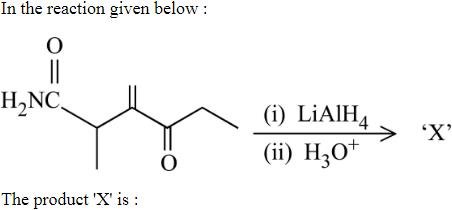
Q77 CHEMISTRY Unit 17: Organic Compounds Containing Oxygen
In the reaction given below, the product $X$ is:
Question 77 image
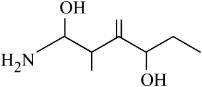
  • A. Product with $\mathrm{NH_2}$ on the left, one $\mathrm{OH}$ near the left side, a ketone in the middle, and another $\mathrm{OH}$ on the right side. Choice A image
  • B. Product with $\mathrm{NH_2}$ on the left, one methyl substituent, a ketone in the middle, and an $\mathrm{OH}$ on the right side. Choice B image
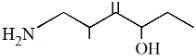
  • C. Product with $\mathrm{NH_2}$ on the left, a methyl substituent, and an $\mathrm{OH}$ on the right side; no carbonyl group present. Choice C image
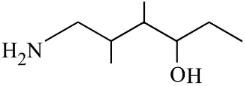
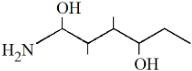
  • D. Product with $\mathrm{NH_2}$ on the left, two $\mathrm{OH}$ groups, and a methyl substituent on the carbon chain. Choice D image
Correct answer & explanation hidden

Log in to view solution →
Q78 CHEMISTRY Unit 15: Hydrocarbons
Buna-S can be represented as:
  • A. $\left[-\mathrm{CH_2-CH=C(C_6H_5)-CH=CH-CH_2-}\right]_n$
  • B. $\left[-\mathrm{CH_2-CH=CH-CH=C(C_6H_5)-CH_2-}\right]_n$
  • C. $\left[-\mathrm{CH=CH-CH=CH-CH(C_6H_5)-CH_2-}\right]_n$
  • D. $\left[-\mathrm{CH_2-CH=CH-CH_2-CH(C_6H_5)-CH_2-}\right]_n$

Correct answer & explanation hidden

Log in to view solution →
Q79 CHEMISTRY Unit 15: Hydrocarbons
The reaction used for preparation of soap from fat is:
  • A. an addition reaction
  • B. alkaline hydrolysis reaction
  • C. an oxidation reaction
  • D. reduction reaction

Correct answer & explanation hidden

Log in to view solution →
Q80 CHEMISTRY Unit 1: Some Basic Concepts in Chemistry
Given below are two statements: one is labelled as Assertion A and the other is labelled as Reason R. Assertion A: $3.1500\,\mathrm{g}$ of hydrated oxalic acid dissolved in water to make $250.0\,\mathrm{mL}$ solution will result in $0.1\,\mathrm{M}$ oxalic acid solution. Reason R: Molar mass of hydrated oxalic acid is $126\,\mathrm{g\ mol^{-1}}$ In the light of the above statements, choose the correct answer from the options given below.
  • A. Both A and R are true and R is the correct explanation of A
  • B. Both A and R are true but R is NOT the correct explanation of A
  • C. A is true but R is false
  • D. A is false but R is true

Correct answer & explanation hidden

Log in to view solution →



