
- A. (a) - (iii), (b) - (iv), (c) - (ii), (d) - (i)
- B. (a) - (ii), (b) - (iii), (c) - (iv), (d) - (i)
- C. (a) - (iv), (b) - (iii), (c) - (ii), (d) - (i)
- D. (a) - (iii), (b) - (ii), (c) - (i), (d) - (iv)
Correct answer & explanation hidden
Log in to view solution →- A. 1 weber
- B. Zero weber
- C. 2 weber
- D. 0.5 weber
Correct answer & explanation hidden
Log in to view solution →- A. 4 : 1
- B. 1 : $\sqrt{2}$
- C. 2 : 1
- D. $\sqrt{2}$ : 1
Correct answer & explanation hidden
Log in to view solution →- A. 90°
- B. 180°
- C. 0°
- D. 45°
Correct answer & explanation hidden
Log in to view solution →- A. No units and no dimensions
- B. Both units and dimensions
- C. Units but no dimensions
- D. Dimensions but no units
Correct answer & explanation hidden
Log in to view solution →- A. 1 : 4
- B. 4 : 1
- C. 1 : 2
- D. 2 : 1
Correct answer & explanation hidden
Log in to view solution →- A. $\sqrt{2}$ times the rms value of the ac source
- B. 1/$\sqrt{2}$ times the rms value of the ac source
- C. The value of voltage supplied to the circuit
- D. The rms value of the ac source
Correct answer & explanation hidden
Log in to view solution →- A. 36 $\times 10^5$ J
- B. 1 $\times 10^5$ J
- C. 36 $\times 10^7$ J
- D. 36 $\times 10^4$ J
Correct answer & explanation hidden
Log in to view solution →- A. 60 Hz
- B. 120 Hz
- C. Zero
- D. 30 Hz
Correct answer & explanation hidden
Log in to view solution →- A. 1 : $\sqrt{2}$
- B. 1 : 2
- C. 1 : 1
- D. $\sqrt{2}$ : 1
Correct answer & explanation hidden
Log in to view solution →- A. 1:3:5:7
- B. 1:1:1:1
- C. 1:2:3:4
- D. 1:4:9:16
Correct answer & explanation hidden
Log in to view solution →- A. 4 : 9
- B. 9 : 4
- C. 1 : 4
- D. 4 : 1
Correct answer & explanation hidden
Log in to view solution →- A. 20 N/kg
- B. 180 N/kg
- C. 0.05 N/kg
- D. 50 N/kg
Correct answer & explanation hidden
Log in to view solution →- A. Equal on both the spheres
- B. Dependent on the material property of the sphere
- C. More on bigger sphere
- D. More on smaller sphere
Correct answer & explanation hidden
Log in to view solution →- A. Increases for conductors but decreases for semiconductors
- B. Decreases for conductors but increases for semiconductors
- C. Increases for both conductors and semiconductors
- D. Decreases for both conductors and semiconductors
Correct answer & explanation hidden
Log in to view solution →- A. +5 D
- B. Infinity
- C. +2 D
- D. +20 D
Correct answer & explanation hidden
Log in to view solution →- A. Magnetic permeability
- B. Electric permittivity
- C. Magnetic flux
- D. Self Inductance
Correct answer & explanation hidden
Log in to view solution →- A. Remains the same
- B. Is equal to the atmospheric pressure
- C. Decreases
- D. Increases
Correct answer & explanation hidden
Log in to view solution →- A. 12.56 x 10^-4 T
- B. 6.28 x 10^-4 T
- C. 6.28 x 10^-2 T
- D. 12.56 x 10^-2 T
Correct answer & explanation hidden
Log in to view solution →
- A. 1 : 2
- B. 1 : $\sqrt{3}$
- C. $\sqrt{3}$ : 1
- D. 1 : 1
Correct answer & explanation hidden
Log in to view solution →- A. Circuit (c) only
- B. Both circuits (a) and (c)
- C. Circuit (a) only
- D. Circuit (b) only
Correct answer & explanation hidden
Log in to view solution →- A. 9
- B. 12
- C. 6
- D. 8
Correct answer & explanation hidden
Log in to view solution →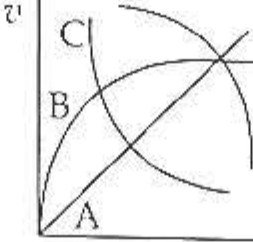
- A. C
- B. D
- C. A
- D. B
Correct answer & explanation hidden
Log in to view solution →- A. 34500
- B. 23500
- C. 23000
- D. 20000
Correct answer & explanation hidden
Log in to view solution →- A. A
- B. B
- C. C
- D. D
Correct answer & explanation hidden
Log in to view solution →- A. 1 A
- B. 2 A
- C. 0.25 A
- D. 1.5 A
Correct answer & explanation hidden
Log in to view solution →- A. $\frac{1}{R^4}$
- B. $\frac{1}{R^3}$
- C. $\frac{1}{R^2}$
- D. $\frac{1}{R^3}$
Correct answer & explanation hidden
Log in to view solution →- A. $\nu_0 = \frac{50}{\pi} \text{Hz}, \nu = 50 \text{Hz}$
- B. $\nu = 100 \text{Hz}; \nu_0 = \frac{100}{\pi} \text{Hz}$
- C. $\nu_0 = \nu = 50 \text{Hz}$
- D. $\nu_0 = \nu = \frac{50}{\pi} \text{Hz}$
Correct answer & explanation hidden
Log in to view solution →- A. $5.6 \times 10^{-3} \text{m}^3$
- B. $5.6 \text{m}^3$
- C. $5.6 \times 10^6 \text{m}^3$
- D. $5.6 \times 10^3 \text{m}^3$
Correct answer & explanation hidden
Log in to view solution →- A. (a)-(ii), (b)-(iv), (c)-(iii), (d)-(i)
- B. (a)-(iv), (b)-(ii), (c)-(i), (d)-(iii)
- C. (a)-(ii), (b)-(i), (c)-(iv), (d)-(iii)
- D. (a)-(ii), (b)-(iv), (c)-(i), (d)-(iii)
Correct answer & explanation hidden
Log in to view solution →- A. 1382.5
- B. $14 \times 10^2$
- C. $138 \times 10^1$
- D. 1382
Correct answer & explanation hidden
Log in to view solution →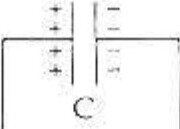
- A. $2.25 \times 10^{-6} \, J$
- B. $4.5 \times 10^{-6} \, J$
- C. $1.5 \times 10^{-6} \, J$
- D. $3.25 \times 10^{-6} \, J$
Correct answer & explanation hidden
Log in to view solution →- A. 10
- B. 8
- C. 11
- D. 9
Correct answer & explanation hidden
Log in to view solution →- A. 5:4
- B. 25:16
- C. 1:1
- D. 4:5
Correct answer & explanation hidden
Log in to view solution →- A. $\tan^{-1}(0.500)$
- B. $\tan^{-1}(0.750)$
- C. $\sin^{-1}(0.500)$
- D. $\sin^{-1}(0.750)$
Correct answer & explanation hidden
Log in to view solution →- A. A linearly increasing function of distance r upto the boundary of the wire and then decreasing one with $1/r$ dependence for the outside region.
- B. A linearly decreasing function of distance upto the boundary of the wire and then a linearly increasing one for the outside region.
- C. Uniform and remains constant for both the regions.
- D. A linearly increasing function of distance upto the boundary of the wire and then linearly decreasing for the outside region.
Correct answer & explanation hidden
Log in to view solution →- A. (A) is true but (R) is false
- B. (A) is false but (R) is true
- C. Both (A) and (R) are true and (R) is the correct explanation of (A)
- D. Both (A) and (R) are true and (R) is not the correct explanation of (A)
Correct answer & explanation hidden
Log in to view solution →- A. $SF_4$
- B. $XeF_2$
- C. $ClF_3$
- D. $IF_5$
Correct answer & explanation hidden
Log in to view solution →- A. Thermoplastic polymers are capable of repeatedly softening and hardening on heating and cooling respectively
- B. Thermosetting polymers are reusable
- C. Elastomers have polymer chains held together by weak intermolecular forces
- D. Fibers possess high tensile strength
Correct answer & explanation hidden
Log in to view solution →- A. $p = p1 + p2 + p3$
- B. $p = n1 + n2 + n3 \frac{RT}{V}$
- C. $P_i = \chi_i p$
- D. $p_i = \chi_i p_i^\circ$ where $p_i^\circ$ is pressure of $i^{th}$ gas in pure state.
Correct answer & explanation hidden
Log in to view solution →- A. Statement I is correct but Statement II is incorrect.
- B. Statement I is incorrect but Statement II is correct.
- C. Both Statement I and Statement II are correct.
- D. Both Statement I and Statement II are incorrect.
Correct answer & explanation hidden
Log in to view solution →- A. Enzymes are polysaccharides.
- B. Enzymes are very specific for a particular reaction and substrate.
- C. Enzymes are biocatalysts.
- D. Like chemical catalysts enzymes reduce the activation energy of bio processes.
Correct answer & explanation hidden
Log in to view solution →- A. (A) is correct but (R) is not correct
- B. (A) is not correct but (R) is correct
- C. Both (A) and (R) are correct and (R) is the correct explanation of (A)
- D. Both (A) and (R) are correct but (R) is not the correct explanation of (A)
Correct answer & explanation hidden
Log in to view solution →- A. Statement I is correct but Statement II is incorrect
- B. Statement I is incorrect but Statement II is correct
- C. Both Statement I and Statement II are correct
- D. Both Statement I and Statement II are incorrect
Correct answer & explanation hidden
Log in to view solution →- A. (A) is correct but (R) is not correct
- B. (A) is not correct but (R) is correct
- C. Both (A) and (R) are correct and (R) is the correct explanation of (A).
- D. Both (A) and (R) are correct but (R) is not the correct explanation of (A).
Correct answer & explanation hidden
Log in to view solution →- A. high electronegativity
- B. high basic character
- C. small size
- D. high exchange enthalpy
Correct answer & explanation hidden
Log in to view solution →- A. $FeSO_4(aq) + Zn(s) \rightarrow ZnSO_4(aq) + Fe(s)$
- B. $2CuSO_4(aq) + 2Ag(s) \rightarrow 2Cu(s) + Ag_2SO_4(aq)$
- C. $CuSO_4(aq) + Zn(s) \rightarrow ZnSO_4(aq) + Cu(s)$
- D. $CuSO_4(aq) + Fe(s) \rightarrow FeSO_4(aq) + Cu(s)$
Correct answer & explanation hidden
Log in to view solution →- A. In an atom, all the five 3d orbitals are equal in energy in free state.
- B. The shapes of $d_{xy}, d_{yz}$ and $d_{zx}$ orbitals are similar to each other; and $d_{x^2-y^2}$ and $d_{z^2}$ are similar to each other.
- C. All the five 5d orbitals are different in size when compared to the respective 4d orbitals.
- D. All the five 4d orbitals have shapes similar to the respective 3d orbitals.
Correct answer & explanation hidden
Log in to view solution →
- A. dicyanidosilver(I) diaquaargentate(I)
- B. diaquasilver(I) dicyanidoargentate(I)
- C. dicyanidosilver(II) diaquaargentate(II)
- D. diaquasilver(II) dicyanidoargentate(II)
Correct answer & explanation hidden
Log in to view solution →- A. Yes, because $E^0_{cell} = +2.733 V$
- B. No, because $E^0_{cell} = -2.733 V$
- C. Yes, because $E^0_{cell} = +0.287 V$
- D. No, because $E^0_{cell} = -0.287 V$
Correct answer & explanation hidden
Log in to view solution →- A. 3.65 g
- B. 9.50 g
- C. 1.25 g
- D. 1.32 g
Correct answer & explanation hidden
Log in to view solution →- A. Enantiomers are superimposable mirror images on each other
- B. A racemic mixture shows zero optical rotation
- C. $S_N1$ reaction yields 1:1 mixture of both enantiomers
- D. The product obtained by $S_N2$ reaction of haloalkane having chirality at the reactive site shows inversion of configuration
Correct answer & explanation hidden
Log in to view solution →- A. 100 ml of solvent
- B. 1000 g of solvent
- C. 500 ml of solvent
- D. 500 g of solvent
Correct answer & explanation hidden
Log in to view solution →- A. $H_2^{+}$ ion has one electron
- B. $O_2^{+}$ ion is diamagnetic
- C. The bond orders of $O_2^{+}, O_2, O_2^{-}$ and $O_2^{2-}$ are 2.5, 2, 1.5 and 1, respectively
- D. $C_2$ molecule has four electrons in its two degenerate $\pi$ molecular orbitals
Correct answer & explanation hidden
Log in to view solution →- A. Cyanohydrin, Acetal, Schiff's base, Oxime
- B. (i) NH2OH, (ii) RNH2, (iii) alcohol, (iv) HCN
- C. (a) - (i), (b) - (iii), (c) - (ii), (d) - (iv)
- D. (a) - (iv), (b) - (iii), (c) - (ii), (d) - (i)
Correct answer & explanation hidden
Log in to view solution →- A. Diamond is $sp^3$ hybridised and graphite is $sp^2$ hybridised.
- B. Both diamond and graphite are used as dry lubricants.
- C. Diamond and graphite have two dimensional network.
- D. Diamond is covalent and graphite is ionic.
Correct answer & explanation hidden
Log in to view solution →- A. Statement I is correct but Statement II is incorrect
- B. Statement I is incorrect but Statement II is correct
- C. Both Statement I and Statement II are correct
- D. Both Statement I and Statement II are incorrect
Correct answer & explanation hidden
Log in to view solution →- A. 4.57
- B. 2.57
- C. 5.57
- D. 3.57
Correct answer & explanation hidden
Log in to view solution →- A. Ionisation enthalpy of alkali metals decreases from top to bottom in the group.
- B. Lithium is the strongest reducing agent among the alkali metals.
- C. Alkali metals react with water to form their hydroxides.
- D. The oxidation number of K in KO2 is +4.
Correct answer & explanation hidden
Log in to view solution →- A. The four terminal Hydrogen atoms and the two Boron atoms lie in one plane.
- B. Both the Boron atoms are $sp^2$ hybridised.
- C. There are two 3-centre-2-electron bonds.
- D. The four terminal B-H bonds are two centre two electron bonds.
Correct answer & explanation hidden
Log in to view solution →
- A. $2.4 \times 10^{31}$
- B. $1.2 \times 10^{21}$
- C. $4.38 \times 10^{-32}$
- D. $1.9 \times 10^{-63}$
Correct answer & explanation hidden
Log in to view solution →- A. The movement is aided by cytoplasmic streaming
- B. Apoplast is continuous and does not provide any barrier to water movement
- C. Movement of water occurs through intercellular spaces and wall of the cells
- D. The movement does not involve crossing of cell membrane
Correct answer & explanation hidden
Log in to view solution →- A. secretion of secondary metabolites and their deposition in the lumen of vessels.
- B. deposition of organic compounds like tannins and resins in the central layers of stem.
- C. deposition of suberin and aromatic substances in the outer layer of stem.
- D. deposition of tannins, gum, resin and aromatic substances in the peripheral layers of stem.
Correct answer & explanation hidden
Log in to view solution →- A. Both the interacting species are negatively impacted
- B. It is necessitated by nature to maintain the ecological balance
- C. It helps in maintaining species diversity in a community
- D. It might lead to extinction of a species
Correct answer & explanation hidden
Log in to view solution →- A. (1) (d), (e) Only
- B. (2) (c), (d), (e) Only
- C. (3) (a), (b), (c) Only
- D. (4) (b), (c) Only
Correct answer & explanation hidden
Log in to view solution →- A. Both the subunits join together to bind with mRNA
- B. The tRNA is activated and the larger subunit of ribosome encounters mRNA
- C. The small subunit of ribosome encounters mRNA
- D. The larger subunit of ribosome encounters mRNA
Correct answer & explanation hidden
Log in to view solution →- A. Allium cepa
- B. Solanum nigrum
- C. Colchicum autumnale
- D. Pisum sativum
Correct answer & explanation hidden
Log in to view solution →- A. Flowers produce foul odours to attract flies and beetles to get pollinated
- B. Moths and butterflies are the most dominant pollinating agents among insects
- C. Pollination by water is quite rare in flowering plants
- D. Pollination by wind is more common amongst abiotic pollination
Correct answer & explanation hidden
Log in to view solution →- A. Ethylene
- B. Cytokinin
- C. ABA
- D. Gibberellin
Correct answer & explanation hidden
Log in to view solution →- A. (1) (b), (e) Only
- B. (2) (a), (c), (e) Only
- C. (3) (b), (d), (e) Only
- D. (4) (a), (c), (d) Only
Correct answer & explanation hidden
Log in to view solution →- A. Chitin
- B. Glucosamine
- C. Cutin
- D. Cellulose
Correct answer & explanation hidden
Log in to view solution →- A. Both genetic mapping and DNA finger printing
- B. Translation
- C. Genetic mapping
- D. DNA finger printing
Correct answer & explanation hidden
Log in to view solution →- A. About 10%
- B. Less than 7%
- C. Approximately 15%
- D. More than 18%
Correct answer & explanation hidden
Log in to view solution →- A. Electrostatic Precipitator
- B. Catalytic Converter
- C. STP
- D. Incinerator
Correct answer & explanation hidden
Log in to view solution →- A. (1) (a)-(iv), (b)-(i), (c)-(ii), (d)-(iii)
- B. (2) (a)-(iii), (b)-(i), (c)-(ii), (d)-(iv)
- C. (3) (a)-(iii), (b)-(iv), (c)-(i), (d)-(ii)
- D. (4) (a)-(iv), (b)-(iii), (c)-(ii), (d)-(i)
Correct answer & explanation hidden
Log in to view solution →- A. Grasshoppers
- B. Monkeys
- C. Drosophila
- D. Birds
Correct answer & explanation hidden
Log in to view solution →- A. for both water and food transportation
- B. osmosis is observed
- C. water is transported
- D. food is transported
Correct answer & explanation hidden
Log in to view solution →- A. Rhodospirillum
- B. Beijerinckia
- C. Rhizobium
- D. Frankia
Correct answer & explanation hidden
Log in to view solution →- A. The presence of chromogenic substrate gives blue coloured DNA bands on the gel.
- B. Bright orange coloured bands of DNA can be observed in the gel when exposed to UV light.
- C. The process of extraction of separated DNA strands from gel is called elution.
- D. The separated DNA fragments are stained by using ethidium bromide.
Correct answer & explanation hidden
Log in to view solution →- A. Statement I is correct but Statement II is incorrect
- B. Statement I is incorrect but Statement II is correct
- C. Both Statement I and Statement II are correct
- D. Both Statement I and Statement II are incorrect
Correct answer & explanation hidden
Log in to view solution →- A. Buttercup
- B. Maize
- C. Cotton
- D. Coriander
Correct answer & explanation hidden
Log in to view solution →- A. Biodiversity loss
- B. Natality
- C. Population explosion
- D. Competition
Correct answer & explanation hidden
Log in to view solution →- A. Statement I is correct but Statement II is incorrect
- B. Statement I is incorrect but Statement II is correct
- C. Both Statement I and Statement II are correct
- D. Both Statement I and Statement II are incorrect
Correct answer & explanation hidden
Log in to view solution →- A. Sites at which crossing over occurs
- B. Terminalization
- C. Synaptonemal complex
- D. Bivalent
Correct answer & explanation hidden
Log in to view solution →- A. Statement I is correct but Statement II is incorrect
- B. Statement I is incorrect but Statement II is correct
- C. Both Statement I and Statement II are correct
- D. Both Statement I and Statement II are incorrect
Correct answer & explanation hidden
Log in to view solution →- A. Rhodophyceae only
- B. Phaeophyceae only
- C. Chlorophyceae and Phaeophyceae
- D. Phaeophyceae and Rhodophyceae
Correct answer & explanation hidden
Log in to view solution →- A. Sites at which crossing over occurs
- B. Terminalization
- C. Synaptonemal complex
- D. Bivalent
Correct answer & explanation hidden
Log in to view solution →- A. (a), (b), (c) and (d) Only
- B. (a), (c), (d) and (e) Only
- C. (a), (b) and (d) Only
- D. (b), (c), (d) and (e) Only
Correct answer & explanation hidden
Log in to view solution →- A. Porphyra - Floridean Starch
- B. Volvox - Starch
- C. Ectocarpus - Fucoxanthin
- D. Ulothrix - Mannitol
Correct answer & explanation hidden
Log in to view solution →- A. (A) is correct but (R) is not correct
- B. (A) is not correct but (R) is correct
- C. Both (A) and (R) are correct and (R) is the correct explanation of (A)
- D. Both (A) and (R) are correct but (R) is not the correct explanation of (A)
Correct answer & explanation hidden
Log in to view solution →- A. Two (2)
- B. Eight
- C. Four
- D. Six
Correct answer & explanation hidden
Log in to view solution →- A. help overcome apical dominance
- B. kill dicotyledonous weeds in the fields
- C. speed up the malting process
- D. promote root growth and root hair formation to increase the absorption surface
Correct answer & explanation hidden
Log in to view solution →- A. Statement I is correct but Statement II is incorrect
- B. Statement I is incorrect but Statement II is correct
- C. Both Statement I and Statement II are correct
- D. Both Statement I and Statement II are incorrect
Correct answer & explanation hidden
Log in to view solution →- A. Micropropagation
- B. Cryopreservation
- C. In vitro fertilization
- D. National Parks
Correct answer & explanation hidden
Log in to view solution →- A. Movement of protons across the membrane to the stroma
- B. Reduction of NADP to NADPH2 on the stroma side of the membrane
- C. Breakdown of proton gradient
- D. Breakdown of electron gradient
Correct answer & explanation hidden
Log in to view solution →- A. Pairing of homologous chromosomes
- B. Coiling and condensation of the chromatids
- C. Spindle fibres attach to kinetochores of chromosomes
- D. Movement of centrioles towards opposite poles
Correct answer & explanation hidden
Log in to view solution →- A. (A) is correct but (R) is not correct
- B. (A) is not correct but (R) is correct
- C. Both (A) and (R) are correct and (R) is the correct explanation of (A)
- D. Both (A) and (R) are correct but (R) is not the correct explanation of (A)
Correct answer & explanation hidden
Log in to view solution →- A. Pairing of homologous chromosomes
- B. Coiling and condensation of the chromatids
- C. Spindle fibres attach to kinetochores of chromosomes
- D. Movement of centrioles towards opposite poles
Correct answer & explanation hidden
Log in to view solution →- A. It is cheaper than diesel
- B. It cannot be adulterated like diesel
- C. CNG burns more efficiently than diesel
- D. The same diesel engine is used in CNG buses making the cost of conversion low
Correct answer & explanation hidden
Log in to view solution →- A. (c), (d) and (e) only
- B. (a), (b) and (d) only
- C. (a), (b) and (c) only
- D. (a), (d) and (e) only
Correct answer & explanation hidden
Log in to view solution →- A. Autoradiography
- B. Gene sequencing
- C. Polymerase Chain Reaction
- D. Gene Silencing
Correct answer & explanation hidden
Log in to view solution →- A. (a), (b) and (d) Only
- B. (c), (d) and (e) Only
- C. (a), (b), (d) and (e) Only
- D. (a), (c), (d) and (e) Only
Correct answer & explanation hidden
Log in to view solution →- A. Commensalism
- B. Competition
- C. Predation
- D. Amensalism
Correct answer & explanation hidden
Log in to view solution →- A. Haemophilia
- B. Thalessemia
- C. Sickle cell anaemia
- D. Myotonic dystrophy
Correct answer & explanation hidden
Log in to view solution →- A. Weathering of rocks
- B. Rain fall and storms
- C. Burning of fossil fuels
- D. Volcanic activity
Correct answer & explanation hidden
Log in to view solution →- A. 5'CTCAGT3'; 3'GAGTCA5'
- B. 5'GTATTC3'; 3'CATAAG5'
- C. 5'GATACT3'; 3'CTATGA5'
- D. 5'GAATTC3'; 3'CTTAAG5'
Correct answer & explanation hidden
Log in to view solution →- A. To enable the plant to tolerate high temperature
- B. To protect the vascular tissue from high light intensity
- C. To provide the site for photorespiratory pathway
- D. To increase the number of chloroplast for the operation of Calvin cycle
Correct answer & explanation hidden
Log in to view solution →- A. Expressed sequence tags
- B. Bioinformatics
- C. Sequence annotation
- D. Gene mapping
Correct answer & explanation hidden
Log in to view solution →- A. Expressed sequence tags
- B. Bioinformatics
- C. Sequence annotation
- D. Gene mapping
Correct answer & explanation hidden
Log in to view solution →- A. (a)-(ii), (b)-(iii), (c)-(iv), (d)-(i)
- B. (a)-(i), (b)-(ii), (c)-(iii), (d)-(iv)
- C. (a)-(iii), (b)-(i), (c)-(iv), (d)-(ii)
- D. (a)-(i), (b)-(iii), (c)-(ii), (d)-(iv)
Correct answer & explanation hidden
Log in to view solution →- A. make its water potential zero
- B. not affect the water potential at all
- C. raise its water potential
- D. lower its water potential
Correct answer & explanation hidden
Log in to view solution →- A. (a)-(iii), (b)-(iv), (c)-(i), (d)-(ii)
- B. (a)-(ii), (b)-(iv), (c)-(i), (d)-(iii)
- C. (a)-(iv), (b)-(i), (c)-(ii), (d)-(iii)
- D. (a)-(ii), (b)-(iii), (c)-(iv), (d)-(i)
Correct answer & explanation hidden
Log in to view solution →- A. Temperature of inhaled air is brought to body temperature
- B. Provides surface for diffusion of O2 and CO2
- C. It clears inhaled air from foreign particles
- D. Inhaled air is humidified
Correct answer & explanation hidden
Log in to view solution →- A. C12H22O11
- B. C12H24O11
- C. C12H20O10
- D. C12H24O12
Correct answer & explanation hidden
Log in to view solution →- A. Statement I is correct but Statement II is incorrect
- B. Statement I is incorrect but Statement II is correct
- C. Both Statement I and Statement II are correct
- D. Both Statement I and Statement II are incorrect
Correct answer & explanation hidden
Log in to view solution →- A. (A) is correct but (R) is not correct
- B. (A) is not correct but (R) is correct
- C. Both (A) and (R) are correct and (R) is the correct explanation of (A)
- D. Both (A) and (R) are correct but (R) is not the correct explanation of (A)
Correct answer & explanation hidden
Log in to view solution →- A. z, y, a genes will not be translated
- B. RNA polymerase will bind the promoter region
- C. Only z gene will get transcribed
- D. z, y, a genes will be transcribed
Correct answer & explanation hidden
Log in to view solution →- A. (A) is correct but (R) is not correct
- B. (A) is not correct but (R) is correct
- C. Both (A) and (R) are correct and (R) is the correct explanation of (A)
- D. Both (A) and (R) are correct but (R) is not the correct explanation of (A)
Correct answer & explanation hidden
Log in to view solution →- A. Metathorax
- B. Prothorax and Mesothorax
- C. Prothorax
- D. Mesothorax
Correct answer & explanation hidden
Log in to view solution →- A. Statement I is correct but Statement II is incorrect
- B. Statement I is incorrect but Statement II is correct
- C. Both Statement I and Statement II are correct
- D. Both Statement I and Statement II are incorrect
Correct answer & explanation hidden
Log in to view solution →- A. In prokaryotes only RER are present
- B. SER are the sites for lipid synthesis
- C. RER has ribosomes attached to ER
- D. SER is devoid of ribosomes
Correct answer & explanation hidden
Log in to view solution →- A. Conserve only endangered species
- B. Conserve only extinct species
- C. Protect and conserve the whole ecosystem
- D. Conserve only high-risk species
Correct answer & explanation hidden
Log in to view solution →- A. Lymphocytes from patient's blood are grown in culture, outside the body.
- B. Genetically engineered lymphocytes are not immortal cells.
- C. Retroviral vector is introduced into these lymphocytes.
- D. Gene isolated from marrow cells producing ADA is introduced into cells at embryonic stages.
Correct answer & explanation hidden
Log in to view solution →- A. Areolar tissue
- B. Smooth muscle
- C. Intercalated discs
- D. Cartilage
Correct answer & explanation hidden
Log in to view solution →- A. Lubrication of oral cavity
- B. Digestion of disaccharides
- C. Control bacterial population in mouth
- D. Digestion of complex carbohydrates
Correct answer & explanation hidden
Log in to view solution →- A. 1.0
- B. zero
- C. 0.1
- D. 10
Correct answer & explanation hidden
Log in to view solution →- A. Disruptive change
- B. Random change
- C. Stabilising change
- D. Directional change
Correct answer & explanation hidden
Log in to view solution →- A. Aspergillus niger
- B. Streptococcus cerevisiae
- C. Trichoderma polysporum
- D. Clostridium butylicum
Correct answer & explanation hidden
Log in to view solution →- A. Cartilage
- B. Neuroglia
- C. Blood
- D. Adipose tissue
Correct answer & explanation hidden
Log in to view solution →- A. Birth
- B. Adult
- C. Puberty
- D. Embryonic development stage
Correct answer & explanation hidden
Log in to view solution →- A. Bio-fortification
- B. Bio-accumulation
- C. Bio-magnification
- D. Bio-remediation
Correct answer & explanation hidden
Log in to view solution →- A. (b), (d) and (e) only
- B. (b), (c) and (e) only
- C. (c) and (e) only
- D. (b) and (c) only
Correct answer & explanation hidden
Log in to view solution →- A. Non-Medicated IUD
- B. Copper releasing IUD
- C. Cervical barrier
- D. Vault barrier
Correct answer & explanation hidden
Log in to view solution →- A. Humification
- B. Decomposition
- C. Catabolism
- D. Fragmentation
Correct answer & explanation hidden
Log in to view solution →- A. Kingdom, Order, Class, Phylum, Family, Genus, Species
- B. Kingdom, Order, Phylum, Class, Family, Genus, Species
- C. Kingdom, Phylum, Class, Order, Family, Genus, Species
- D. Kingdom, Class, Phylum, Family, Order, Genus, Species
Correct answer & explanation hidden
Log in to view solution →- A. Gemmules
- B. Buds
- C. Zoospores
- D. Conidia
Correct answer & explanation hidden
Log in to view solution →- A. 4 ml
- B. 10 ml
- C. 2 ml
- D. 5 ml
Correct answer & explanation hidden
Log in to view solution →- A. Statement I is correct but Statement II is incorrect
- B. Statement I is incorrect but Statement II is correct
- C. Both Statement I and Statement II are correct
- D. Both Statement I and Statement II are incorrect
Correct answer & explanation hidden
Log in to view solution →- A. (A) is correct but (R) is not correct
- B. (A) is not correct but (R) is correct
- C. Both (A) and (R) are correct and (R) is the correct explanation of (A)
- D. Both (A) and (R) are correct but (R) is not the correct explanation of (A)
Correct answer & explanation hidden
Log in to view solution →- A. Pairing of homologous chromosomes and recombination occurs in Meiosis-I
- B. Four haploid cells are formed at the end of Meiosis-II
- C. There are two stages in Meiosis, Meiosis-I and II
- D. DNA replication occurs in S phase of Meiosis-II
Correct answer & explanation hidden
Log in to view solution →- A. 3.3 X 10^6 bp
- B. 6.6 X 10^6 bp
- C. 3.3 x 10^9 bp
- D. 6.6 x 10^9 bp
Correct answer & explanation hidden
Log in to view solution →- A. Chromosomes decondense at telophase
- B. Splitting of centromere occurs at anaphase
- C. All the chromosomes lie at the equator at metaphase
- D. Spindle fibres attach to centromere of chromosomes
Correct answer & explanation hidden
Log in to view solution →- A. Hippocampus
- B. Pavo
- C. Ornithorhynchus
- D. Salamandra
Correct answer & explanation hidden
Log in to view solution →- A. Catla, Columba, Crocodilus
- B. Pavo, Psittacula, Corvus
- C. Corvus, Columba, Chameleon
- D. Bufo, Balaenoptera, Bangarus
Correct answer & explanation hidden
Log in to view solution →- A. Myasthenia gravis - Genetic disorder resulting in weakening and paralysis of skeletal muscle
- B. Muscular dystrophy - An autoimmune disorder causing progressive degeneration of skeletal muscle
- C. Arthritis - Inflamed joints
- D. Tetany - High Ca^2+ level causing rapid spasms
Correct answer & explanation hidden
Log in to view solution →- A. Catla, Columba, Crocodilus
- B. Pavo, Psittacula, Corvus
- C. Corvus, Columba, Chameleon
- D. Bufo, Balaenoptera, Bangarus
Correct answer & explanation hidden
Log in to view solution →- A. Statement I is correct but Statement II is incorrect
- B. Statement I is incorrect but Statement II is correct
- C. Both Statement I and Statement II are correct
- D. Both Statement I and Statement II are incorrect
Correct answer & explanation hidden
Log in to view solution →- A. Statement I is correct but Statement II is incorrect
- B. Statement I is incorrect but Statement II is correct
- C. Both Statement I and Statement II are correct
- D. Both Statement I and Statement II are incorrect
Correct answer & explanation hidden
Log in to view solution →- A. Statement I is correct but Statement II is incorrect
- B. Statement I is incorrect but Statement II is correct
- C. Both Statement I and Statement II are correct
- D. Both Statement I and Statement II are incorrect
Correct answer & explanation hidden
Log in to view solution →- A. (a) - (ii), (b) - (iv), (c) - (i), (d) - (iii)
- B. (a) - (iii), (b) - (ii), (c) - (i), (d) - (iv)
- C. (a) - (iv), (b) - (i), (c) - (iii), (d) - (ii)
- D. (a) - (iv), (b) - (i), (c) - (ii), (d) - (iii)
Correct answer & explanation hidden
Log in to view solution →- A. Slime moulds are saprophytic organisms classified under Kingdom Monera.
- B. Mycoplasma have DNA, ribosome and cell wall.
- C. Cyanobacteria are a group of autotrophic organisms classified under kingdom Monera.
- D. Bacteria are exclusively heterotrophic organisms.
Correct answer & explanation hidden
Log in to view solution →- A. Anamnestic response is due to memory of first encounter.
- B. Acquired immunity is non-specific type of defense present at the time of birth.
- C. Primary response is produced when our body encounters a pathogen for the first time.
- D. Anamnestic response is elicited on subsequent encounters with the same pathogen.
Correct answer & explanation hidden
Log in to view solution →- A. (a) and (e) only
- B. (b) and (c) only
- C. (a) and (c) only
- D. (b), (d) and (e) only
Correct answer & explanation hidden
Log in to view solution →- A. (a) - (ii), (b) - (i), (c) - (iv), (d) - (iii)
- B. (a) - (iii), (b) - (iv), (c) - (ii), (d) - (i)
- C. (a) - (iv), (b) - (iii), (c) - (i), (d) - (ii)
- D. (a) - (i), (b) - (ii), (c) - (iii), (d) - (iv)
Correct answer & explanation hidden
Log in to view solution →- A. Homology indicates common ancestry
- B. Flippers of penguins and dolphins are a pair of homologous organs
- C. Analogous structures are a result of convergent evolution
- D. Sweet potato and potato is an example of analogy
Correct answer & explanation hidden
Log in to view solution →- A. Statement I is correct but Statement II is incorrect
- B. Statement I is incorrect but Statement II is correct
- C. Both Statement I and Statement II are correct
- D. Both Statement I and Statement II are incorrect
Correct answer & explanation hidden
Log in to view solution →- A. (a) - (ii), (b) - (iv), (c) - (iii), (d) - (i)
- B. (a) - (iv), (b) - (iii), (c) - (i), (d) - (ii)
- C. (a) - (iii), (b) - (ii), (c) - (iv), (d) - (i)
- D. (a) - (iv), (b) - (ii), (c) - (i), (d) - (iii)
Correct answer & explanation hidden
Log in to view solution →- A. 60 cells
- B. 80 cells
- C. 20 cells
- D. 40 cells
Correct answer & explanation hidden
Log in to view solution →- A. (c) and (d) only
- B. (c), (d) and (e) only
- C. (a), (b) and (d) only
- D. (b) only
Correct answer & explanation hidden
Log in to view solution →- A. Blood moves freely from atrium to the ventricle during joint diastole.
- B. Increased ventricular pressure causes closing of the semilunar valves.
- C. The atria-ventricular node (AVN) generates an action potential to stimulate atrial contraction
- D. The tricuspid and the bicuspid valves open due to the pressure exerted by the simultaneous contraction of the atria
Correct answer & explanation hidden
Log in to view solution →- A. Presence of single restriction enzyme site
- B. Presence of two or more recognition sites
- C. Presence of origin of replication
- D. Presence of a marker gene
Correct answer & explanation hidden
Log in to view solution →- A. 75%
- B. 100%
- C. 25%
- D. 50%
Correct answer & explanation hidden
Log in to view solution →- A. a, b, c, d
- B. a, c, b, d
- C. a, d, b, c
- D. d, b, a, c
Correct answer & explanation hidden
Log in to view solution →- A. Chemical synapses use neurotransmitters.
- B. Impulse transmission across a chemical synapse is always faster than that across an electrical synapse.
- C. The membranes of presynaptic and postsynaptic neurons are in close proximity in an electrical synapse.
- D. Electrical current can flow directly from one neuron into the other across the electrical synapse.
Correct answer & explanation hidden
Log in to view solution →- A. 90°
- B. 120°
- C. 30°
- D. 60°
Correct answer & explanation hidden
Log in to view solution →- A. $ ext{CH}_3 ext{CH}_3$
- B. $ ext{C}_{12} ext{H}_{24} ext{O}_{12}$
Correct answer & explanation hidden
Log in to view solution →- A. 0.9615 V
- B. 1.05 V
- C. 1.0385 V
- D. 1.385 V
Correct answer & explanation hidden
Log in to view solution →- A. +7 to +3
- B. +6 to +5
- C. +7 to +4
- D. +6 to +4
Correct answer & explanation hidden
Log in to view solution →